Consumer Watchdog Report Shows, Uber's New R2 Rivian Robotaxi Fleet Won't Be Accountable To Drivers and Pedestrians They Injure And Kill Under Uber's 2026 "License To Kill" CA Ballot Initiative
PR Newswire
LOS ANGELES, March 19, 2026
LOS ANGELES, March 19, 2026 /PRNewswire/ -- Uber announced today a partnership to put 50,000 Rivian Robotaxis on the road, including in San Francisco.
A report issued this week by the nonprofit Consumer Watchdog found that a ballot measure the company is pursuing in California for 2026, as well as legislation in other states, will remove the companies from liability for injuring, maiming and killing pedestrians and other motorists.
The California ballot initiative strictly limits victims' medical recovery in all accident cases and will prevent the seriously injured from finding contingency fee attorneys, making it difficult to sue robocar operators, manufacturers, or any reckless driver or automaker.
"This is a naked power grab by Uber to remove liability for its robotaxis and accelerate their rollout without accountability when their robotaxis harm or kill pedestrians and other drivers," said Jamie Court, president of Consumer Watchdog, the nonprofit that issued the report, "License To Kill: How Uber's Rush To Close Courthouse Doors And Roll Out Robocars Threatens Public Safety." "Uber's ballot measure would strictly limit robotaxis' liability for accidents, injuries and product liability design cases. These are untested technologies that polls show Californians don't want on their roads. Uber's record with self-driving cars is horrific as the company's autonomous car is responsible for the one and only death of a pedestrian from a robocar. Uber is arrogantly using its power to change the rules of the road so that it can push robotaxis out before they are ready for the road and the public is ready for them."
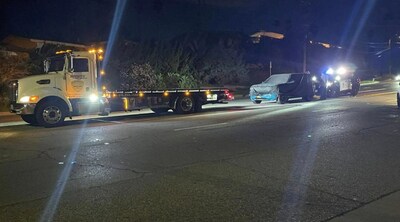
Uber's new partner, the Rivian R2, hasn't logged a single AV testing mile in California, according to California DMV disengagement records filed through the end of 2025. However, a report from Torque News at the end of February 2026 found a broken-down Rivian R2 prototype being towed. Companies typically would need to test drive their robocars hundreds of millions of miles before they are safe to deploy. A RAND report on robocars states: "Fully autonomous vehicles would have to be driven hundreds of millions of miles and sometimes hundreds of billions of miles to demonstrate their safety in terms of fatalities and injuries."
Among the report's findings:
Medical Cost Caps Limit Access To Care: Uber's California proposal would cap recoverable medical expenses at levels tied closely to Medicare reimbursement rates. These limits could prevent accidents victims from getting care and healthcare providers from treating crash victims because the capped reimbursements would not cover the actual cost of care.
Proposed CA Law Would Block Seriously Injured Victims From Finding Lawyers: Under Uber's proposed California law, seriously injured accident victims would not be able to get contingency lawyers because the proposal makes it economically unviable for an attorney to take a case on a contingency basis. The proposal requires that, for the purposes of an attorney fees contract, medical expenses and contingency fees come out of the same 25% pot that attorneys would receive. If, for example, medical expenses total more than $250,000 on a $1 million accident policy, the attorney would receive nothing.
Product Liability Cases Would Be Eviscerated: The initiative would also apply to product defect claims related to vehicle crashes, such as those that have been used to hold the makers of semi-autonomous vehicles accountable. This would make it significantly harder to pursue cases involving defective airbags, braking systems, steering failures, battery problems, or faulty software. These lawsuits have historically played a critical role in forcing manufacturers to improve vehicle safety. Weakening these legal tools would reduce incentives for companies to address dangerous defects, including those in autonomous driving systems.
Liability Limits Will Normalize Robotaxis Before They Are Ready For The Road: Uber has announced plans, for example, to deploy up to 20,000 robotaxis in partnership with autonomous vehicle developer Nuro over the next six years. However, its partner Nuro's testing record in California lags far behind competitors. Nuro could not go 700 miles without a human intervention when Waymo could go nearly 20,000 miles. In 2025, Nuro vehicles reportedly logged fewer than 160,000 autonomous miles in California, compared with more than 3 million miles driven by Waymo. The Nuro cars are cheaply made and without the sensor capacity of Waymo's. Expert interviewed by Consumer Watchdog say little is publicly known about Uber's testing protocols, safety standards, or vehicle specifications. "There are a lot of unknowns," said Bryant Walker-Smith, an associate professor in the School of Law and the College of Engineering and Computing at the University of South Carolina, in January. "Uber is running a prototype that it started testing last month. We don't know what safety standards, if any, Uber is adhering to. We don't know the specs of the car. We don't know about their internal testing. We don't know cost of production." At recent Senate hearings, lawmakers also raised concerns about autonomous vehicles being monitored by remote operators overseas, so-called "trans-Atlantic backseat drivers," who are not covered by existing regulatory frameworks.

 View original content to download multimedia:https://www.prnewswire.com/news-releases/consumer-watchdog-report-shows-ubers-new-r2-rivian-robotaxi-fleet-wont-be-accountable-to-drivers-and-pedestrians-they-injure-and-kill-under-ubers-2026-license-to-kill-ca-ballot-initiative-302719093.html
SOURCE Consumer Watchdog