Heart Medication Almost Kills Lovable Mastiff
PR Newswire
MINNEAPOLIS, Feb. 11, 2026
Valentine's Day Toxin Tail Highlights Common Prescription Accident
MINNEAPOLIS, Feb. 11, 2026 /PRNewswire/ -- When you're in love, your heart can race, and you can feel like your blood pressure is through the roof. While that's wonderful for romance, many people have to take medication to keep their blood pressure stable. For one curious Mastiff named Sully, the pharmacy package was too tempting.
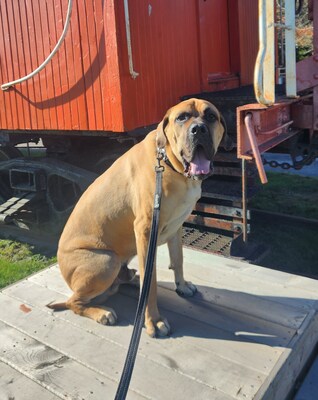
"Sully had never shown an interest in my pills before, and I've been taking this particular blood pressure medication for more than two years," explained Alexandra Jackson from Musquodoboit Harbour, Nova Scotia, Canada. "We had been out to dinner, but I go to bed early because I'm a baker. When I went into my bedroom, there was this strange white powder all over the bed. I realized Sully had ripped open the bag containing my unopened blood pressure medication and chewed open the bottle. I collected all of the uneaten pills, and there were 30 missing – a month's supply. I think the bag must have looked like a snack to him."
Even though Sully weighs nearly 185lbs, Jackson knew immediately that amount of medication could be dangerous, and he needed to go to the hospital. Her husband called Maritime Veterinary Emergency and Specialty Centre in Dartmouth to let them know they were bringing Sully in for treatment. Because the ingestion involved a potential toxin, the hospital had Jackson call Pet Poison Helpline next so they could start working on a treatment plan.
"Sully ingested a medication used in animals and humans for hypertension and arrhythmias (irregular heartbeat) called amlodipine, and the amount he ingested was a life-threatening dose for his size," said Dr. Renee Schmid, a senior veterinary toxicologist and director of Veterinary Medicine at Pet Poison Helpline. "When taken in too great of a quantity, amlodipine can result in cardiovascular depression such as a low heart rate and blood pressure, hypocalcemia (low levels of calcium in the blood), a metabolic abnormality called acidosis and hypokalemia (low levels of potassium in the blood). In rare cases, it can cause pulmonary edema (fluid in the lungs). Unfortunately, death can occur due to the severe effects of an amlodipine overdose.
"Thankfully we took him in right away," Jackson added. "The woman on the phone at Pet Poison Helpline was fabulous. She asked about Sully's weight, the exact type and amount of medication he had ingested, when it happened and other details. By the time we arrived at the emergency hospital, they had already begun developing a treatment plan."
Because Jackson had called in advance, the hospital staff were able to immediately start working on Sully. He was not showing any symptoms when he first arrived at the hospital, so his initial treatment included an antiemetic, medical grade activated charcoal, intravenous fluids, blood work and aggressive monitoring of his heart rate, blood pressure, and other vitals. Sully developed dangerously low blood pressure within a few hours, and additional medications (intravenous lipid emulsion and calcium gluconate) were recommended to help counter the negative effects of amlodipine. His response to therapy was touch and go and the heroics of the veterinary team at Maritime Veterinary allowed Sully to make a full recovery.
"Sully's family, Pet Poison Helpline and Maritime Veterinary were all lifesavers, and working together, gave Sully the greatest chance for survival," added Dr. Schmid. "There is a high likelihood Sully would not be here today without the contributions of everyone involved." After three days in the hospital, Sully was able to return home.
"It was a very expensive lesson (approximately 8,000 Canadian dollars)," Jackson added. "It took him a day or two to become himself again, but now he's back to normal and I'll definitely keep my medications out of reach in the future."
Pet Poison Helpline created Toxin Tails to educate the veterinary community and pet lovers on the many types of poisoning dangers facing pets, both in and out of the home. All the pets highlighted in Toxin Tails have been successfully treated for the poisoning and fully recovered.
About Pet Poison Helpline
Pet Poison Helpline®, your trusted source for toxicology and pet health advice in times of potential emergency, is available 24 hours, seven days a week for pet owners and veterinary professionals who require assistance treating a potentially poisoned pet. Per incident and subscription service options are available. We are an independent, nationally recognized animal poison control center triple licensed by the Boards of Veterinary Medicine, Medicine and Pharmacy providing unmatched professional leadership and expertise. Our veterinarians and board-certified toxicologists provide treatment advice for all species, including dogs, cats, birds, small mammals, large animals and exotic species. As the most cost-effective option for animal poison control care, Pet Poison Helpline's fee of $89 per incident includes follow-up consultations for the duration of the case. The company also offers pethelpline(SM) and pethelplinePRO(SM) subscription services directly to pet lovers. Based in Minneapolis, Pet Poison Helpline is available in North America by calling 800-213-6680. Additional information, including a chat feature for pet owners, can be found online at www.petpoisonhelpline.com.
Contact: Curtis Steinhoff
Pet Poison Helpline®
(602) 300-8466
csteinhoff@petpoisonhelpline.com

 View original content to download multimedia:https://www.prnewswire.com/news-releases/heart-medication-almost-kills-lovable-mastiff-302684150.html
SOURCE Pet Poison Helpline